
1 Then shall the kingdom of heaven be likened unto ten virgins, which took their lamps, and went forth to meet the bridegroom.
6 And at midnight there was a cry made, Behold, the bridegroom cometh; go ye out to meet him.
7 Then all those virgins arose, and trimmed their lamps.
8 And the foolish said unto the wise, Give us of your oil; for our lamps are gone out.
9 But the wise answered, saying, Not so; lest there be not enough for us and you: but go ye rather to them that sell, and buy for yourselves.
12 But he answered and said, Verily I say unto you, I know you not.
13 Watch therefore, for ye know neither the day nor the hour wherein the Son of man cometh.
Matthew 25:1-13
Matthew 25:1-13
Cooking With Honey
• Store honey at room temperature. If it crystallizes, stand the jar in a pot of hot water until it liquefies again.
• Before you measure honey for cooking, oil the measuring cup and the honey will pour out easily.
• Substitute sugar with honey and your cookies and cake keep much longer.
| Honey | 1 cup | 1–1/4 cups sugar plus 1/2 cup liquid |
• To glaze cooked sliced carrots, stir in 2 tablespoons each honey and butter and heat briefly.
• Slowly heat 1 cup honey with 1/2 teaspoon cinnamon or ground cloves. Cool and serve over waffles or ice cream.
How Sweet It Is
Folklore lists honey under remedies for arthritis, asthma, bed-wetting, constipation, coughs, sore throats, and weight control.
• Stir a spoonful of honey into a hot drink to promote relaxation and sleep.
• Chew a bit of honeycomb if your body is overheated.
• Use a touch of honey on chapped lips as a healing balm.
• Slowly heat 1 cup honey with 1/2 teaspoon cinnamon or ground cloves. Cool and serve over waffles or ice cream.
How Sweet It Is
Folklore lists honey under remedies for arthritis, asthma, bed-wetting, constipation, coughs, sore throats, and weight control.
• Stir a spoonful of honey into a hot drink to promote relaxation and sleep.
• Chew a bit of honeycomb if your body is overheated.
• Use a touch of honey on chapped lips as a healing balm.
"At the root of self-reliance are the dignity
and importance of seeing ourselves as
children of God regardless of circumstance,
culture, or location."
Elder M. Russell Ballard
and importance of seeing ourselves as
children of God regardless of circumstance,
culture, or location."
Elder M. Russell Ballard
Cannery Price increase effective now!
http://providentliving.org/content/display/0,11666,8133-1-4352-1,00.html
Big price increases at the cannery.
Wheat is now $11.45 (up from $7.65)
The price went up in the 20 most bought foods
19.1% in 22 months or about 1% a month.
biggest increase in:
Sugar 26%
Regular Oats 29.6%
White Wheat 31.9%
Macaroni 36.4%
Potato Flakes 39.2%
Rice and beans increased very little during the same period.
Anything that is corn related, like meat, is going up very rapidly.
http://providentliving.org/content/display/0,11666,8133-1-4352-1,00.html
Big price increases at the cannery.
Wheat is now $11.45 (up from $7.65)
The price went up in the 20 most bought foods
19.1% in 22 months or about 1% a month.
biggest increase in:
Sugar 26%
Regular Oats 29.6%
White Wheat 31.9%
Macaroni 36.4%
Potato Flakes 39.2%
Rice and beans increased very little during the same period.
Anything that is corn related, like meat, is going up very rapidly.
Smelly Drains
1/2 cup Baking Soda
1 cup Vinegar
Pour Baking Soda into drain. Pour Vinegar in after it. It will foam. Leave for 5 - 10 min. Pour hot water for 30 seconds. Do this every month to avoid clogged and smelly drains.
Preparedness Pro LIVE Radio Programs
Tune in to the Self-Reliance Revolution Radio Show broadcast LIVE every Wednesday at 6:00 p.m.- 8:00 p.m. Mountain time.
Self-Reliance Revolution April 6, 2011: Depression. Anxiety. Addiction. Autism. Schizophrenia. Post Traumatic Stress Disorders—while as a society we’re able to cope with these illnesses quite well, would any of these conditions be a liability to your survival in a disaster scenario? On this weeks’ Self-Reliance Revolution Show we’re going to delve into the hard reality of mental and behavioral illnesses and what can be done about it now in order to pull back the dark curtains and allow hope and light be a part of life now and in the midst of more challenging circumstances. Our special guest will share with us details of an amazing new technology that’s changing the lives of everyday persons struggling with these obstacles as well as high-profile professional athletes, singers, and Hollywood stars.
Every Saturday morning at 10:00 a.m. – noon you can tune in to The Preparedness Pro Radio Show.
The Preparedness Pro Radio Show April 9, 2011: With skyrocketing grocery prices, is there really something you can do to reign in your household expenses and still provide your family with quality meals? Absolutely! Find out how The Preparedness Pro and a special guest, The Krazy Coupon Lady, share with you their painless, effective, and realistic ways of saving extreme amounts of money on all of your household expenses! Discover how you can take advantage of over 322 BILLION coupons circulated each year by your favorite manufacturers and vendors and essentially “time travel” back to the 1940’s for YOUR grocery prices!
NOTE: Both shows can be listened to right from your computer!
Need to add some honey to your food storage? Amazon.com has some good prices right now!

 See even more similar items See even more similar items |
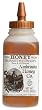 | Ambrosia Pure Honey From Colorado's Western Slope, 16-Ounce Bottles (Pack of 4) List Price: by Ambrosia Average customer review:  Price: $16.99 ($0.27 / oz) You Save: $1.01 (6%) |
| |||


![[ ]](http://g-ecx.images-amazon.com/images/G/01/x-locale/personalization/ratings-bar/light-blue/check-off._V192250580_.gif)
 | Wholesome Sweeteners Organic Fair Trade Amber Honey, 16 Ounce Jars (Pack of 3) List Price: by Wholesome Sweeteners Average customer review:  Price: $23.08 ($0.48 / oz) You Save: $6.92 (23%) |
| |||
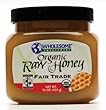 | Wholesome Sweeteners Organic Fair Trade Raw Honey, 16 Ounce Jars (Pack of 3) List Price: by Wholesome Sweeteners Average customer review: Price: $25.13 ($0.52 / oz) You Save: $4.87 (16%) |
| |||
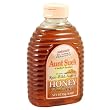 | Aunt Sue's Honey, Raw-Wild Natural, 16-Ounce Container (Pack of 6) Price: $28.30 ($0.29 / oz)by Aunt Sue Average customer review: |
| |||
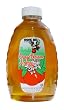 | Tropic Bee Orange Blossom Honey, 32-Ounce Bottle List Price: by Tropic Bee Average customer review:  Price: $10.00 ($0.31 / oz) You Save: $3.50 (26%) |
| |||
 | Madhava Pure Clover Honey, 24-Ounce Bottles (Pack of 4) List Price: by Madhava Average customer review: Price: $20.48 ($0.21 / oz) You Save: $5.20 (20%) |
|
Posted: 30 Mar 2011 08:30 AM PDT Julie from Food Storage Made Easy is here today to share her food storage space. Here are some tips that I have found have made my food storage more organized, useful, and rotated. I find building and using your food storage to be an ever changing thing, and I keep adapting as I learn more. I have a food storage area in an unfinished part of my basement (I know we're lucky to have basements). I also have a little cupboard space upstairs I use for day to day cooking. MY FOOD STORAGE AREA: I call this my food storage area, because it's just against a wall in my basement. In my "dream" home, I'll have a whole dedicated room, with all sorts of super cool shelves and stuff, but for now this is like heaven compared to my condo before. I have three areas along the wall. One is for long term foods, the shelves are for three month supply, and I have an area for water. Ok- ok, I have a fourth area - it's called a big fat pile of non-food items, and appliances that are waiting for a new shelf area I also keep some water and my 72 hour kits upstairs in case we had to evacuate, or my whole basement got smooshed in a disaster. Oh and this reminds me, I need to put up a blanket against that window to block light from getting onto my long term food. I just moved everything around and before this wasn't an issue. Light makes food go bad faster. 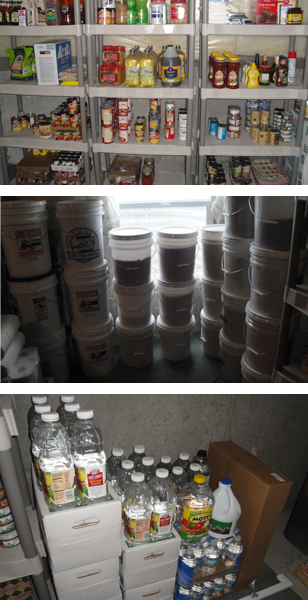 TIP FOR KEEPING MY STORAGE ORGANIZED: In my food storage room downstairs I try to keep like foods together on shelves. That way I can quickly get stuff assessed and know where everything is easily. I like to keep fats together, sugars together, condiments, and all sorts of other logical (to me) groupings. 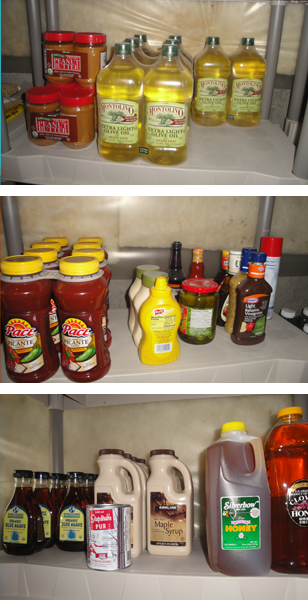 TIP FOR MAKING USING FOOD STORAGE EASIER: I put all the ingredients I need for making bread on one shelf in one of my cupboards. That way when it's bread making day, I just pull all the things off that one shelf and I'm ready to go. Having to dig, and push through other ingredients is something I have always hated about baking, so this way I'm ready to go right away. 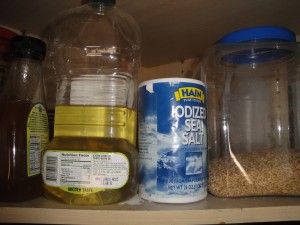 TIP FOR ROTATING MY FOOD STORAGE: These are ALL the cans in my upstairs pantry. How is this Food Storage? Well you see by keeping very, very few of my three month supply types of foods upstairs, I am FORCED to go downstairs to get food out of my food storage and use it. When I go grocery shopping, I come STRAIGHT home and put my food in the basement. Then when I need food, I have to go down there (send one of my cute little kids) to get it. I know it sounds annoying, but if I don't do it this way, I'd end up using everything I just barely bought first, and my food storage in the basement would just collect dust. 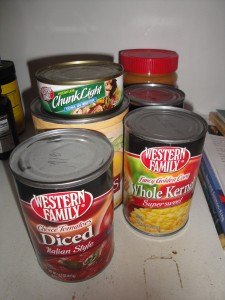 TIP FOR USING MY LONG TERM FOOD STORAGE: One way I encourage myself to use my long term food storage such as grains and legumes is I keep smaller containers of them upstairs. I know this contradicts my previous tip a little - but it's different- trust me. I save containers from nuts I get at Costco and use them to store the smaller quantities of my long term foods. This makes making pancakes, or muffins and all that kind of stuff with whole grains a lot easier. I also use my legumes a lot more in soups and chili's. 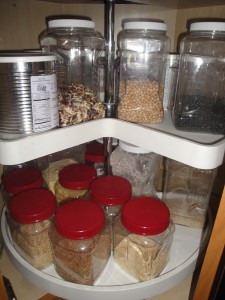 TIP FOR REPLACING FOODS I'VE USED: Placed conveniently on a work table right next to the food storage is a pad of paper for me to write down things I take out of my food storage so I can replace them next time I'm shopping, or next time there is a sale. My dear husband knows if he takes something off a shelf he BEST be writing it down on that paper - or else ;) 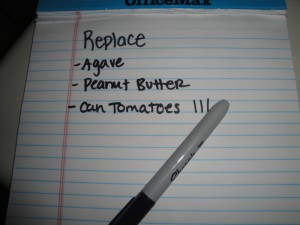 HEY WAIT! How did this get in here. Ok fine- when I go grocery shopping I DON'T immediately put the food in the basement. I put it on the stairs DOWN to the basement and deal with it later. 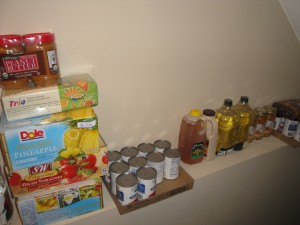 For anyone feeling OVERWHELMED right now- here's a look at what my food storage area looked like 3 years ago. THIS was my before and after. Through a lot of time, dedication, and sacrifice (no Disney trips for us) I have been able to build it up to a little less sad than it was. 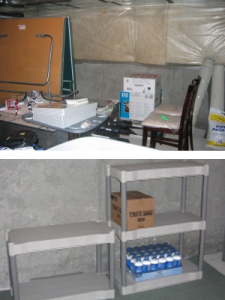 With sacrifice and hard work, you can have a great food storage just like hers.  |
How Long Will Food Last Once A #10 Can Is Opened?
“We stand at the crossroads, each minute, each hour,
each day, making choices. We choose the thoughts we
allow ourselves to think, the passions we allow ourselves
to feel, and the actions we allow ourselves to
perform. Each choice is made in the context of whatever
value system we’ve selected to govern our lives. In
selecting that value system, we are, in a very real way,
making the most important choice we will ever make."
Benjamin Franklin
1706-1790
If you don't have a good water purifier, get one NOW. There are many good ones out there. Cheepest is not always the best. You need one that does more than make your water taste good. Check out this site and see all that the filters do then work from there. http://www.berkeyfilters.com/berkeymodels.htm?gclid=CNOThJjMg6gCFRUq2god9Sszsg

Saving Money at the Grocery Store
http://video.aol.com/aolvideo/aol-living/kitchendaily-try-this-saving-money-at-the-grocery-store/830655973001
http://video.aol.com/aolvideo/aol-living/kitchendaily-try-this-saving-money-at-the-grocery-store/830655973001
Bedding
http://video.aol.com/aolvideo/aol-personal-finance/savings-experiment-save-on-bedding/864357722001
Dishwashing
http://www.aolnews.com/savings-experiment-video/dishwashing
Food Inflation Kept Hidden in Tinier Bags
By STEPHANIE CLIFFORD and CATHERINE RAMPELL
Chips are disappearing from bags, candy from boxes and vegetables from cans.
As an expected increase in the cost of raw materials looms for late summer, consumers are beginning to encounter shrinking food packages.
With unemployment still high, companies in recent months have tried to camouflage price increases by selling their products in tiny and tinier packages. So far, the changes are most visible at the grocery store, where shoppers are paying the same amount, but getting less.
For Lisa Stauber, stretching her budget to feed her nine children in Houston often requires careful monitoring at the store. Recently, when she cooked her usual three boxes of pasta for a big family dinner, she was surprised by a smaller yield, and she began to suspect something was up.
“Whole wheat pasta had gone from 16 ounces to 13.25 ounces,” she said. “I bought three boxes and it wasn’t enough — that was a little embarrassing. I bought the same amount I always buy, I just didn’t realize it, because who reads the sizes all the time?”
Ms. Stauber, 33, said she began inspecting her other purchases, aisle by aisle. Many canned vegetables dropped to 13 or 14 ounces from 16; boxes of baby wipes went to 72 from 80; and sugar was stacked in 4-pound, not 5-pound, bags, she said.
Five or so years ago, Ms. Stauber bought 16-ounce cans of corn. Then they were 15.5 ounces, then 14.5 ounces, and the size is still dropping. “The first time I’ve ever seen an 11-ounce can of corn at the store was about three weeks ago, and I was just floored,” she said. “It’s sneaky, because they figure people won’t know.”
In every economic downturn in the last few decades, companies have reduced the size of some products, disguising price increases and avoiding comparisons on same-size packages, before and after an increase. Each time, the marketing campaigns are coy; this time, the smaller versions are “greener” (packages good for the environment) or more “portable” (little carry bags for the takeout lifestyle) or “healthier” (fewer calories).
Where companies cannot change sizes — as in clothing or appliances — they have warned that prices will be going up, as the costs of cotton, energy, grain and other raw materials are rising.
“Consumers are generally more sensitive to changes in prices than to changes in quantity,” John T. Gourville, a marketing professor at Harvard Business School, said. “And companies try to do it in such a way that you don’t notice, maybe keeping the height and width the same, but changing the depth so the silhouette of the package on the shelf looks the same. Or sometimes they add more air to the chips bag or a scoop in the bottom of the peanut butter jar so it looks the same size.”
Thomas J. Alexander, a finance professor at Northwood University, said that businesses had little choice these days when faced with increases in the costs of their raw goods. “Companies only have pricing power when wages are also increasing, and we’re not seeing that right now because of the high unemployment,” he said.
Most companies reduce products quietly, hoping consumers are not reading labels too closely.
But the downsizing keeps occurring. A can of Chicken of the Sea albacore tuna is now packed at 5 ounces, instead of the 6-ounce version still on some shelves, and in some cases, the 5-ounce can costs more than the larger one. Bags of Doritos, Tostitos and Fritos now hold 20 percent fewer chips than in 2009, though a spokesman said those extra chips were just a “limited time” offer.
Trying to keep customers from feeling cheated, some companies are introducing new containers that, they say, have terrific advantages — and just happen to contain less product.
Kraft is introducing “Fresh Stacks” packages for its Nabisco Premium saltines and Honey Maid graham crackers. Each has about 15 percent fewer crackers than the standard boxes, but the price has not changed. Kraft says that because the Fresh Stacks include more sleeves of crackers, they are more portable and “the packaging format offers the benefit of added freshness,” said Basil T. Maglaris, a Kraft spokesman, in an e-mail.
And Procter & Gamble is expanding its “Future Friendly” products, which it promotes as using at least 15 percent less energy, water or packaging than the standard ones.
“They are more environmentally friendly, that’s true — but they’re also smaller,” said Paula Rosenblum, managing partner for retail systems research at Focus.com, an online specialist network. “They announce it as great new packaging, and in fact what it is is smaller packaging, smaller amounts of the product,” she said.
Or marketers design a new shape and size altogether, complicating any effort to comparison shop. The unwrapped Reese’s Minis, which were introduced in February, are smaller than the foil-wrapped Miniatures. They are also more expensive — $0.57 an ounce at FreshDirect, versus $0.37 an ounce for the individually wrapped.
At H. J. Heinz, prices on ketchup, condiments, sauces and Ore-Ida products have already gone up, and the company is selling smaller-than-usual versions of condiments, like 5-ounce bottles of items like Heinz 57 Sauce sold at places like Dollar General.
“I have never regretted raising prices in the face of significant cost pressures, since we can always course-correct if the outcome is not as we expected,” Heinz’s chairman and chief executive, William R. Johnson, said last month.
While companies have long adjusted package sizes to appeal to changing tastes, from supersizes to 100-calorie packs, the recession drove a lot of corporations to think small. The standard size for Edy’s ice cream went from 2 liters to 1.5 in 2008. And Tropicana shifted to a 59-ounce carton rather than a 64-ounce one last year, after the cost of oranges rose.
With prices for energy and for raw materials like corn, cotton and sugar creeping up and expected to surge later this year, companies are barely bothering to cover up the shrinking packs.
“Typically, the product manufacturers are doing this slightly ahead of the perceived inflationary issues,” Ms. Rosenblum said. “Lately, it hasn’t been subtle — I mean, they’ve been shrinking by noticeable amounts.”
That can work to a company’s benefit. In the culture of thinness, smaller may be a selling point. It lets retailers honestly claim, for example, that a snack package contains fewer calories — without having to change the ingredients a smidge.
“For indulgences like ice cream, chocolate and potato chips, consumers may say ‘I don’t mind getting a little bit less because I shouldn’t be consuming so much anyway,’ ” said Professor Gourville. “That’s a harder argument to make with something like diapers or orange juice.”
But even while companies blame the recession for smaller packages, they rarely increase sizes in good times, he said.
He traced the shrinking package trends to the late 1980s, when companies like Chock full o’ Nuts downsized the one-pound tin of ground coffee to 13 ounces. That shocked consumers, for whom a pound of coffee had been as standard a purchase unit as a dozen eggs or a six-pack of beer, he said.
Once the economy rebounds, he said, a new “jumbo” size product typically emerges, at an even higher cost per ounce. Then the gradual shrinking process of all package sizes begins anew, he said.
“It’s a continuous cycle, where at some point the smallest package offered becomes so small that perhaps they’re phased out and replaced by the medium-size package, which has been shrunk down,” he said.
--Forwarded Message Attachment--
“We stand at the crossroads, each minute, each hour,
each day, making choices. We choose the thoughts we
allow ourselves to think, the passions we allow ourselves
to feel, and the actions we allow ourselves to
perform. Each choice is made in the context of whatever
value system we’ve selected to govern our lives. In
selecting that value system, we are, in a very real way,
making the most important choice we will ever make."
Benjamin Franklin
1706-1790
If you don't have a good water purifier, get one NOW. There are many good ones out there. Cheepest is not always the best. You need one that does more than make your water taste good. Check out this site and see all that the filters do then work from there. http://www.berkeyfilters.com/berkeymodels.htm?gclid=CNOThJjMg6gCFRUq2god9Sszsg

Saving Money at the Grocery Store
http://video.aol.com/aolvideo/aol-living/kitchendaily-try-this-saving-money-at-the-grocery-store/830655973001
http://video.aol.com/aolvideo/aol-living/kitchendaily-try-this-saving-money-at-the-grocery-store/830655973001
Bedding
http://video.aol.com/aolvideo/aol-personal-finance/savings-experiment-save-on-bedding/864357722001
Dishwashing
http://www.aolnews.com/savings-experiment-video/dishwashing
Food Inflation Kept Hidden in Tinier Bags
By STEPHANIE CLIFFORD and CATHERINE RAMPELL
Chips are disappearing from bags, candy from boxes and vegetables from cans.
As an expected increase in the cost of raw materials looms for late summer, consumers are beginning to encounter shrinking food packages.
With unemployment still high, companies in recent months have tried to camouflage price increases by selling their products in tiny and tinier packages. So far, the changes are most visible at the grocery store, where shoppers are paying the same amount, but getting less.
For Lisa Stauber, stretching her budget to feed her nine children in Houston often requires careful monitoring at the store. Recently, when she cooked her usual three boxes of pasta for a big family dinner, she was surprised by a smaller yield, and she began to suspect something was up.
“Whole wheat pasta had gone from 16 ounces to 13.25 ounces,” she said. “I bought three boxes and it wasn’t enough — that was a little embarrassing. I bought the same amount I always buy, I just didn’t realize it, because who reads the sizes all the time?”
Ms. Stauber, 33, said she began inspecting her other purchases, aisle by aisle. Many canned vegetables dropped to 13 or 14 ounces from 16; boxes of baby wipes went to 72 from 80; and sugar was stacked in 4-pound, not 5-pound, bags, she said.
Five or so years ago, Ms. Stauber bought 16-ounce cans of corn. Then they were 15.5 ounces, then 14.5 ounces, and the size is still dropping. “The first time I’ve ever seen an 11-ounce can of corn at the store was about three weeks ago, and I was just floored,” she said. “It’s sneaky, because they figure people won’t know.”
In every economic downturn in the last few decades, companies have reduced the size of some products, disguising price increases and avoiding comparisons on same-size packages, before and after an increase. Each time, the marketing campaigns are coy; this time, the smaller versions are “greener” (packages good for the environment) or more “portable” (little carry bags for the takeout lifestyle) or “healthier” (fewer calories).
Where companies cannot change sizes — as in clothing or appliances — they have warned that prices will be going up, as the costs of cotton, energy, grain and other raw materials are rising.
“Consumers are generally more sensitive to changes in prices than to changes in quantity,” John T. Gourville, a marketing professor at Harvard Business School, said. “And companies try to do it in such a way that you don’t notice, maybe keeping the height and width the same, but changing the depth so the silhouette of the package on the shelf looks the same. Or sometimes they add more air to the chips bag or a scoop in the bottom of the peanut butter jar so it looks the same size.”
Thomas J. Alexander, a finance professor at Northwood University, said that businesses had little choice these days when faced with increases in the costs of their raw goods. “Companies only have pricing power when wages are also increasing, and we’re not seeing that right now because of the high unemployment,” he said.
Most companies reduce products quietly, hoping consumers are not reading labels too closely.
But the downsizing keeps occurring. A can of Chicken of the Sea albacore tuna is now packed at 5 ounces, instead of the 6-ounce version still on some shelves, and in some cases, the 5-ounce can costs more than the larger one. Bags of Doritos, Tostitos and Fritos now hold 20 percent fewer chips than in 2009, though a spokesman said those extra chips were just a “limited time” offer.
Trying to keep customers from feeling cheated, some companies are introducing new containers that, they say, have terrific advantages — and just happen to contain less product.
Kraft is introducing “Fresh Stacks” packages for its Nabisco Premium saltines and Honey Maid graham crackers. Each has about 15 percent fewer crackers than the standard boxes, but the price has not changed. Kraft says that because the Fresh Stacks include more sleeves of crackers, they are more portable and “the packaging format offers the benefit of added freshness,” said Basil T. Maglaris, a Kraft spokesman, in an e-mail.
And Procter & Gamble is expanding its “Future Friendly” products, which it promotes as using at least 15 percent less energy, water or packaging than the standard ones.
“They are more environmentally friendly, that’s true — but they’re also smaller,” said Paula Rosenblum, managing partner for retail systems research at Focus.com, an online specialist network. “They announce it as great new packaging, and in fact what it is is smaller packaging, smaller amounts of the product,” she said.
Or marketers design a new shape and size altogether, complicating any effort to comparison shop. The unwrapped Reese’s Minis, which were introduced in February, are smaller than the foil-wrapped Miniatures. They are also more expensive — $0.57 an ounce at FreshDirect, versus $0.37 an ounce for the individually wrapped.
At H. J. Heinz, prices on ketchup, condiments, sauces and Ore-Ida products have already gone up, and the company is selling smaller-than-usual versions of condiments, like 5-ounce bottles of items like Heinz 57 Sauce sold at places like Dollar General.
“I have never regretted raising prices in the face of significant cost pressures, since we can always course-correct if the outcome is not as we expected,” Heinz’s chairman and chief executive, William R. Johnson, said last month.
While companies have long adjusted package sizes to appeal to changing tastes, from supersizes to 100-calorie packs, the recession drove a lot of corporations to think small. The standard size for Edy’s ice cream went from 2 liters to 1.5 in 2008. And Tropicana shifted to a 59-ounce carton rather than a 64-ounce one last year, after the cost of oranges rose.
With prices for energy and for raw materials like corn, cotton and sugar creeping up and expected to surge later this year, companies are barely bothering to cover up the shrinking packs.
“Typically, the product manufacturers are doing this slightly ahead of the perceived inflationary issues,” Ms. Rosenblum said. “Lately, it hasn’t been subtle — I mean, they’ve been shrinking by noticeable amounts.”
That can work to a company’s benefit. In the culture of thinness, smaller may be a selling point. It lets retailers honestly claim, for example, that a snack package contains fewer calories — without having to change the ingredients a smidge.
“For indulgences like ice cream, chocolate and potato chips, consumers may say ‘I don’t mind getting a little bit less because I shouldn’t be consuming so much anyway,’ ” said Professor Gourville. “That’s a harder argument to make with something like diapers or orange juice.”
But even while companies blame the recession for smaller packages, they rarely increase sizes in good times, he said.
He traced the shrinking package trends to the late 1980s, when companies like Chock full o’ Nuts downsized the one-pound tin of ground coffee to 13 ounces. That shocked consumers, for whom a pound of coffee had been as standard a purchase unit as a dozen eggs or a six-pack of beer, he said.
Once the economy rebounds, he said, a new “jumbo” size product typically emerges, at an even higher cost per ounce. Then the gradual shrinking process of all package sizes begins anew, he said.
“It’s a continuous cycle, where at some point the smallest package offered becomes so small that perhaps they’re phased out and replaced by the medium-size package, which has been shrunk down,” he said.
Make your own Yougart!!!
You won't want to miss this one!
http://www.preparednesspro.com/blog/just-enough-calories-to-kill-ya%e2%80%99/#more-14
How about some Home Cleaners
Watch the video!
http://www.walletpop.com/2011/03/24/watch-me-score-woman-goes-crazy-over-vinegar/?icid=maing%7Cmain5%7Cdl4%7Csec1_lnk3%7C51690
